
View a eulogy for Robert Alois Barker, USMA '38, who passed away on January 17, 1945.
Other important links:
Robert Alois Barker
West Point, 1938
Be Thou At Peace
Posted by Joseph M. Cowan on May 14, 2015:
|
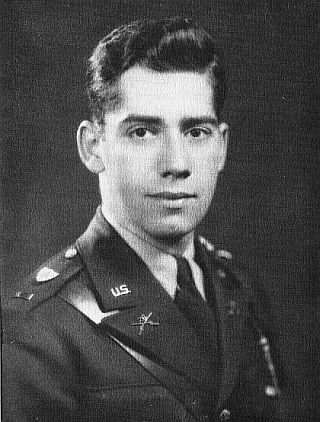
Robert Alois Barker was born February 17, 1916, the second son of Morton Darrell and Emily Ashbrook Barker. With his two brothers, Paul (1914-2004) and Morton Jr. (1919-2005), he grew up in Springfield, IL and was educated in public schools. In 1934, Robert won an appointment to West Point. He graduated and was commissioned 2nd Lieutenant in June 1938. Robert married Janet Louise Tidmarsh, age 19, daughter of Elmer A. and Louise Tidmarsh of Glenn Falls, NY on December 27, 1938. After graduation, Lt. Barker was assigned to Plattsburgh Barracks, New York from 1938-39 followed by a posting at Fort Benning, Georgia from 1939-40. He volunteered for duty with the U.S. Army Philippine Division. Robert and Janet arrived in Manila on July 20, 1940. Shortly after joining the 31st Infantry Regiment, he was promoted to Captain and placed in command of the Anti-Tank Company. Early in 1941, threats of war with Japan grew stronger. Janet, now pregnant, was returned to the United States along with other wives and dependents. Daughter, Emily Louise Barker, was born October 12, 1941. On December 8, Japan invaded the Philippines. U.S. and Philippine forces held out for four months. With supplies exhausted and no hope of reinforcements, the Bataan Defense Force, including the 31st Infantry, surrendered on April 9, 1942. 75,000 American and Filipino prisoners of war were forced onto the 65 mile Bataan Death March. Seven to ten thousand died before arriving at their destination, Camp O'Donnell. Captain Barker survived. On June 18, 1942, Captain Barker was sent to Cabanatuan prison camp in central Luzon, the largest POW camp in the Philippines. On November 5, he was shipped, with 1,000 other internees, to Davao Penal Colony on the island of Mindanao. At great risk, Captain Barker maintained a secret diary recording forced labor, extreme hunger, disease, brutal treatment, and boredom. In his writings, he always held out the hope of rejoining his wife and daughter. In 1944 the Imperial Japanese Army accelerated efforts to move American POWs to Japan. On October 2, Captain Barker was taken to Bilibid Prison in Manila, the central transfer point for shipment. Prisoners were stuffed into cargo holds of naval transports that POWs named the "hell ships." With little air, food, or water and journeys that lasted weeks, many perished from asphyxia, starvation, and dysentery. Hell ships lacked POW markings and were targeted as enemy vessels by Allied aircraft. Knowing it would be impossible to keep the diary concealed, Captain Barker entrusted it to a friend, Major Tom Bell, who was seriously wounded and unlikely to be transported. Major Bell returned the diary to the Barker family after the war. On December 13, Captain Barker and 1,618 other prisoners were loaded onto the hell ship Oryoku Maru. Two days later, the vessel was attacked by American fighters resulting in 300 POW deaths. Captain Barker and other survivors were removed to Olongapo Naval Base and confined for a week in an open enclosure with little food and no sanitation. On Christmas Day, Captain Barker and others were forced into the cargo hold of a second hell ship, Enoura Maru, which arrived in Taiwan New Year's Day 1945. POWs remained in the hold until January 9 when the vessel was bombed by US forces. 200 prisoners perished. Captain Barker and other survivors were herded onto a third hell ship, Brazil Maru. On January 17 1945, Robert Alois Barker, age 28, died in the cold, dark, cargo hold as the result of starvation, disease, and exhaustion. He was buried at sea. The Brazil Maru arrived in Japan, January 29, with only 435 of the original 1,619 American officers and men who began their journey 47 days earlier. In 1990, brothers Morton and Paul published Captain Barker's diary under the title Philippine Diary, A Journal of Life as a Japanese Prisoner of War. The original diary is in the Special Collections Section of the United States Military Academy Library, West Point. In the preface, Paul wrote: "The journal reveals [my brother's] character, his courage, his sense of responsibility, his ingenuity and, in spite of all hardships, his good humor and appreciation of nature." Captain Barker's final letter was to his wife Janet on December 13, 1944. He wrote: "In a couple of hours we leave here for Japan as far as we are able to ascertain. It seems so terrible now especially with the American troops so near Manila in Leyte. . . we have been in Bilibid since October 2 and thought we would not be taken out after all this time . . . all I want to tell you . . . is that I am well and love you more than I knew one could love. My only thoughts during this long imprisonment have been to return to you and live the life we had so beautifully begun." |
 admin admin |
West-Point.Org (WP-ORG), a 501(c)(3) non-profit organization, provides an online communications infrastructure that enable graduates, parents, and friends of the military academy to maintain and strengthen the associations that bind us together. We will provide this community any requested support, consistent with this purpose, as quickly and efficiently as possible. WP-ORG is funded by the generosity of member contributions. Our communication services are provided in cooperation with the AOG (independent of USMA) and are operated by volunteers serving the Long Gray Line. For questions or comments, please email us at feedback@west-point.org.